Moose Silhouette with Floral Pattern
As a designer who spends half my life digitizing and the other half stitching, I don’t just look at a file; I look at how it will behave under the needle. When I first pulled up Moose Silhouette with Floral Pattern, I didn’t just see a cute animal. I saw a potential bestseller for a specific type of buyer—one who loves rustic aesthetics, woodland themes, and high-quality handmade goods. This isn’t just another clip art download. It is a versatile graphics asset that sits squarely in the Crafts category but has serious legs in the world of commercial embroidery.
The First Impression: Mood and Visual Weight
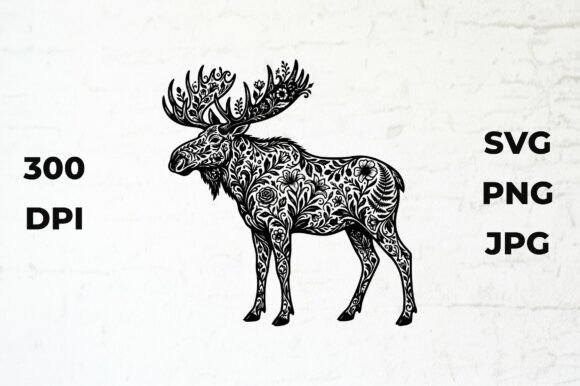
The moment you open this design, the mood is set. It is calm, organic, and deeply rooted in nature. The silhouette of the moose provides a strong, recognizable anchor, while the intricate floral pattern inside fills the negative space with texture and interest. For an embroidery designer, this balance is critical. If the internal details are too fine, they get lost in the stitching. If the silhouette is too thin, it lacks presence on fabric.
This design strikes a confident middle ground. The floral elements feel lush without being chaotic. It suggests a handmade product that feels intentional and curated. Whether you are creating a personalized gift for a cabin lover or a boutique item for a craft fair, this image carries a weight of professionalism. It doesn’t look like a quick sketch; it looks like a finished illustration ready to be translated into thread. The visual personality is warm and inviting, which is exactly what drives engagement on platforms like Etsy or in physical market stalls.
Real-World Application: Where This Design Shines
I recently put this design through its paces by imagining it on various substrates. The versatility of Moose Silhouette with Floral Pattern is its strongest selling point for small business owners. Here is where I see it performing best:
- Tote Bags and Canvas Totes: A large tote bag offers plenty of surface area. Placing this design centrally allows the floral interior to breathe. The contrast between the canvas texture and the smooth satin stitch outlines (if used) creates a tactile experience that customers love.
- Sweatshirt Embroidery: Think about those cozy, oversized hoodies popular with young adults. A chest-sized placement of this moose design adds a touch of whimsy without overwhelming the garment. It fits perfectly into the "cottagecore" or outdoor lifestyle aesthetic.
- Baby Embroidery Items: On onesies, burp cloths, or nursery wall hangings, the softness of the floral pattern works beautifully. It is gentle enough for a baby’s room but distinctive enough to stand out as a premium gift.
- Kitchen Towels and Aprons: For the home cook who loves nature, this design brings warmth to the kitchen. A tea towel with this motif feels like a thoughtful housewarming present.
- Embroidered Patches: Because the design is self-contained within the silhouette, it translates exceptionally well into patches. You can add a border, and you have a ready-made accessory for denim jackets or backpacks.
For the Etsy seller or craft business owner, these are high-demand niches. The design allows you to create cohesive collections—matching mugs, pillows, and apparel—that all share that same visual language.
Technical Considerations and Stitching Strategy
Let’s talk about the mechanics. As a machine embroidery design, how this vector translates to stitch-out depends heavily on your digitizing choices. Since we are starting with a high-resolution digital embroidery file concept, we need to think about density and detail.
The floral pattern inside the moose is intricate. If you attempt to replicate every tiny petal with a running stitch, you risk creating a dense, stiff area that might pucker the fabric. Instead, consider using a combination of techniques. Use a fill stitch for the background foliage to create a soft, textured look, and reserve satin stitch for the outer contour of the moose to give it a clean, defined edge. This contrast in stitch types adds depth and makes the design pop.
Thread color selection is paramount here. You cannot simply use one color. To make the floral pattern visible, you need tonal variations. Think sage greens, dusty blues, muted yellows, and perhaps a cream or white for the highlights. The thread colors should complement each other to enhance the silhouette rather than compete with it. If you are working on dark fabric, ensure your base layer is opaque enough to cover the background, or use a stabilizer that supports the weight of the fill stitches.
When to Be Cautious
No design is perfect for every situation. There are scenarios where Moose Silhouette with Floral Pattern might struggle:
- Small Hoop Sizes: If you try to cram this intricate design into a 4x4 hoop, the details will become muddy. The tiny flowers may merge into a blob. Stick to larger hoops (6x10 or bigger) to allow the design to breathe.
- Textured or Stretchy Fabrics: Knits and heavy wools can distort fine details. If you are embroidering on a stretchy cap brim, the tension might cause the floral pattern to shift. Always use a proper stabilizer—cut-away for knits—to maintain integrity.
- Dark Fabric: While possible, light-colored floral patterns can get lost against black or navy unless you use a high-density underlay or a contrasting background patch.
- Curved Surfaces: Embroidering directly onto a curved hat crown requires advanced technique. The flat vector nature of the original graphic needs careful mapping to avoid distortion.
Impact on Brand and Customer Trust
In the world of commercial embroidery, presentation is everything. Customers can often tell the difference between a mass-produced print and a carefully stitched piece. A well-executed version of this moose design signals quality. It shows that you care about detail. When a customer sees the crisp lines of the silhouette and the thoughtful arrangement of the florals, it builds trust in your brand.
It also enhances the perceived value of your small shop product. You aren’t just selling a tote bag; you are selling a piece of wearable art. This distinction allows you to price your items higher and attract buyers who appreciate craftsmanship. For design assets sellers, providing mockups that show this design on realistic fabrics helps buyers visualize the final result, reducing returns and increasing satisfaction.
Practical Designer Notes Before You Start
Before you commit to a full production run or list this as a new digital product, follow these steps:
- Test on Scrap Fabric: Never skip this step. Stitch the design out on the exact fabric you plan to sell. Check how the threads interact with the weave.
- Check Stitch Density: Ensure the fill areas aren’t too dense, which can cause puckering, or too sparse, which can show the backing material.
- Review Small Details: Zoom in on the floral elements. Are any lines too thin to stitch reliably? If so, adjust the digitizing settings to thicken them slightly.
- Confirm Licensing: Even though this is a downloadable asset, verify the license terms. Can you sell finished products? Can you resell the digital file? Clarity here protects your business.
- Use Proper Stabilizer: Match your stabilizer to your fabric weight. Heavy designs need heavy support.
- Inspect Black and White Mockups: Convert your design to grayscale to check contrast. If the floral pattern disappears in black and white, it might struggle in certain lighting conditions in real life.
Moose Silhouette with Floral Pattern is more than just a pretty picture. It is a functional, emotive, and commercially viable design that rewards careful execution. By understanding its strengths and respecting its technical requirements, you can transform this vector into a stunning finished product that resonates with customers and elevates your craft business.